

Why Galt Basements Flood Even When It’s Not Raining Hard – Hydrostatic Pressure Explained
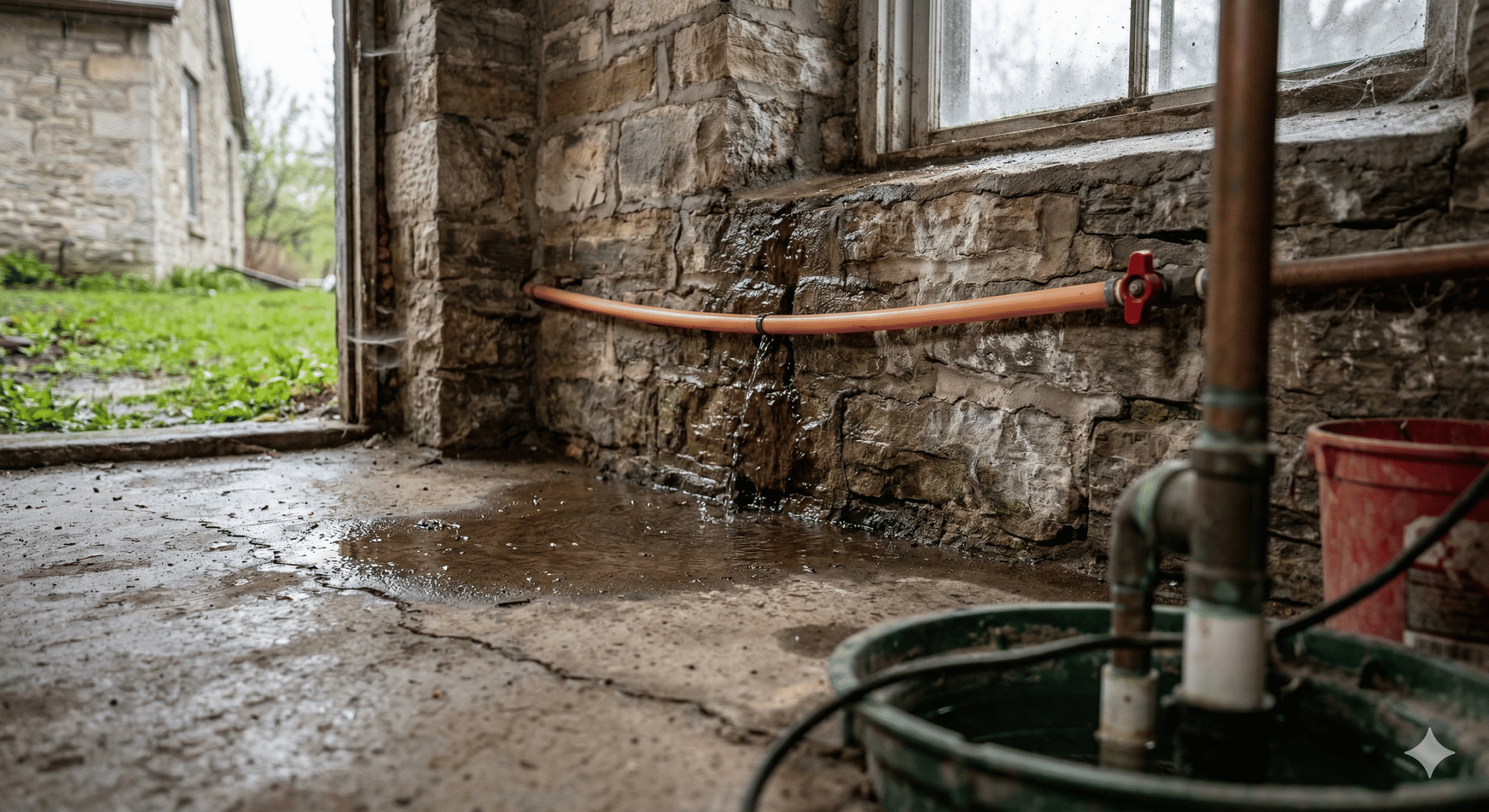
The Phone Call We Get Every Spring in Galt
“There’s water coming in through the basement floor and I don’t understand why – it hasn’t even rained that hard.”
We hear this every spring from homeowners across Galt, Cambridge. They’ve checked the sky. They’ve looked for burst pipes. They’ve convinced themselves something in their plumbing must have failed. And then they call us – and we explain hydrostatic pressure.
It’s not their plumbing. It’s the ground beneath their foundation. And in Galt, the Grand River is a key reason why this happens more reliably here than in many other parts of Waterloo Region.
What Is Hydrostatic Pressure?
Water always moves from where there’s more pressure to where there’s less. When the soil around and beneath your foundation becomes saturated from snowmelt, a rising water table, or prolonged rain that water is under pressure. It’s being squeezed by the weight of wet soil above it and from every direction around it.
Your foundation walls and concrete slab are in its way. And concrete, however solid it looks, is not waterproof. It’s porous. Over time, it develops micro-cracks, cold joints where pours meet, and gaps around pipe penetrations. Water under pressure finds every one of those gaps and exploits them.
This is hydrostatic pressure. It’s not a leak from above. It’s water being forced upward and inward from below and around your foundation by the sheer pressure of saturated ground. No amount of roof inspection or eavestrough cleaning will fix it.
Why Galt Is Particularly Vulnerable in Spring
Galt sits along the Grand River, and this matters in a specific way that most homeowners don’t think about. The Grand River has what’s called a groundwater connection to the surrounding soil. When the river rises from snowmelt upstream, ice jam releases, or sustained spring rain the groundwater table across Galt rises with it. Not just near the riverbank. Across the neighbourhood.
This is sometimes called a “hydraulic connection” between the river and the local water table. The river acts like a pressure source. As its level rises, it pushes outward through the soil, raising the saturation point beneath and around the foundations of homes that may be several blocks away from the water’s visible edge.
This is why Galt homeowners see basement seepage during light melt events when their neighbours in other parts of Cambridge do not. Your home is sitting in a ground that is effectively connected to a rising river. Rain is secondary. The river table is the driver.
The Sump Pump: Your Only Active Defence Against Hydrostatic Pressure
There are passive defences against hydrostatic pressure – waterproof coatings, interior drainage membranes, properly functioning weeping tile. But in an active spring pressure event, your sump pump is the only system in your home that is actively working to remove groundwater before it reaches your floor.
Here’s how it works. Weeping tile – the perforated pipe that runs along the outside or inside base of your foundation – collects groundwater as it moves toward your foundation. That water drains to your sump pit. The sump pump activates when the water in the pit reaches a certain level, pumps it out through a discharge line, and sends it away from your house.
What Happens When the Sump Pump Fails During a Pressure Event
The sump pit fills. Groundwater backs up through the weeping tile. It has nowhere to go except through the path of least resistance – floor drain openings, cracks in the slab, gaps around pipe penetrations, and the cold joint where your walls meet the floor. What started as a slow seep becomes an active flood within hours.
This is the sequence we see when we’re called for emergency basement flooding in Galt during spring. In most cases, the sump pump has either failed mechanically, been overwhelmed by a volume it wasn’t sized for, or lost power during a storm. In nearly every case, the problem was preventable with a spring inspection and, where appropriate, a battery backup or secondary pump.
Why Spring Is Peak Sump Pump Failure Season
A sump pump that has sat dormant through a dry fall and winter is not the same as a pump that’s been running reliably for months. Inactivity allows the float switch to stick. Debris settles in the pit and can jam the intake. Discharge lines can freeze if not properly insulated. And the first major spring melt – when the pump is needed most urgently – is when these dormant failure modes reveal themselves.
The warning signs that your sump pump may not be ready for spring:
- The pump runs but the pit level doesn’t drop, or drops very slowly
- You can hear the pump motor but no water is moving through the discharge line
- The pump cycles on and off rapidly without fully clearing the pit
- There is a burning or electrical smell near the pump
- The pit is dry and the pump hasn’t run at all despite wet soil conditions outside
Any of these signs warrants a service call before the next major melt event, not after.
What You Can Do Right Now
You don’t need to understand every detail of foundation hydrology to protect your home. You need to know four things:
- Test your sump pump manually. Pour water into the pit and confirm the float triggers and the pump fully clears the water within a minute.
- Check your discharge line. Confirm it’s not blocked, frozen, or directing water back toward your foundation.
- Inspect the pit for debris. Silt, gravel, and small stones can jam the intake screen and kill an otherwise functional pump.
- Consider a battery backup. A backup pump activates if your primary fails or loses power. In a spring flood event in Galt, power and pump failures often happen together.
If you’re not comfortable doing this yourself, or if your pump is more than seven years old, a professional inspection is the right call. Sump pump replacement is one of the most cost-effective investments a Galt homeowner can make heading into spring.
Book a Spring Sump Pump Inspection in Cambridge or Galt
We offer spring plumbing inspections for Cambridge homeowners that cover sump pump function, discharge line condition, floor drain backwater valve status, and visible signs of hydrostatic seepage in the foundation. We’ll give you a plain-language assessment of your home’s groundwater risk heading into the melt season.
Call us today. Sump pump failures don’t schedule themselves around your availability.
Plumbing Problem? Call Us Today
Plumbing Problem? Call Us Today