

What Are Polybutylene Pipes? And Why Toronto Homeowners Are Replacing Them Before They Fail
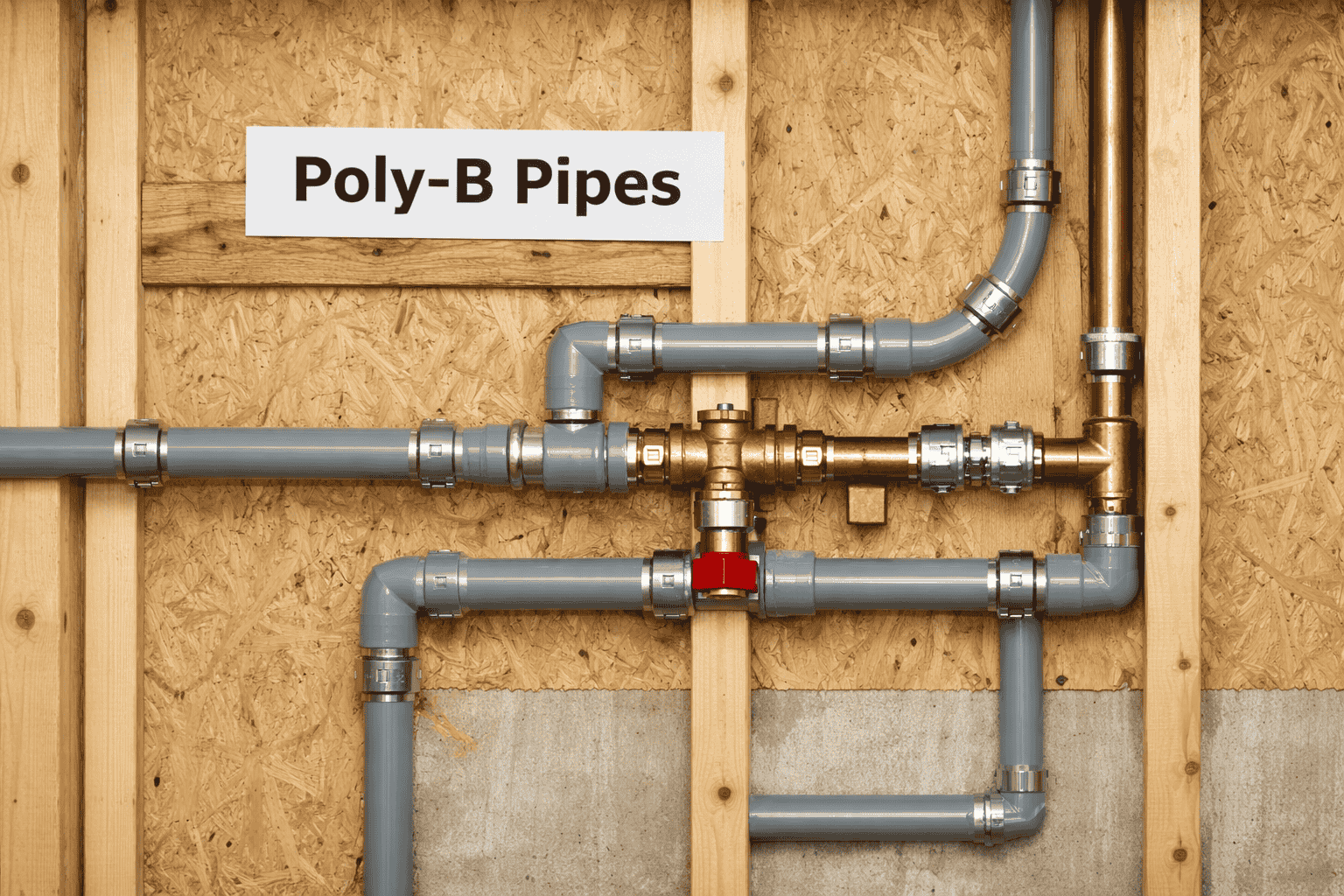
Polybutylene (Poly-B) is a flexible grey plastic water supply pipe installed in homes from the late 1970s to mid-1990s. It was marketed as:
- Cheaper than copper
- Faster to install
- Freeze-resistant
- “The future of plumbing”
You’ll usually see matte grey tubing stamped PB2110, running behind drywall, above basement ceilings, and into kitchens and bathrooms.
At installation, it met standards of the time. Over decades, however, performance revealed long-term failure patterns that homeowners are still dealing with today.
Is Polybutylene the Same as PVC?
No.
PVC (white rigid pipe) is primarily used for drain and vent systems under the Ontario Building Code (OBC). Polybutylene was used for pressurized potable water supply lines.
Different material. Different purpose. Different risk profile.
If someone says it’s “just plastic like PVC,” they don’t understand the difference.
Why Polybutylene Pipes Became a Problem
Polybutylene reacts to oxidants in municipal water – specifically chlorine and chloramine. Over time, this causes internal micro-fracturing. The pipe becomes brittle from the inside out.
Failure rarely starts dramatically. It often appears as:
- A ceiling stain
- Slight wall discoloration
- Damp insulation
- A small pinhole leak
Then one day – rupture.
Real Toronto Case
A Scarborough homeowner noticed minor ceiling discoloration. A thermal scan showed moisture spread across four feet of cavity space.
Cause: ½” Poly-B line cracked at a crimp fitting.
Damage included drywall replacement, insulation removal, flooring repair, and electrical work.
Total remediation: $18,000+
Full proactive repipe would have cost less than half.
This is the pattern: quiet deterioration followed by expensive consequences.
What Do Polybutylene Pipes Look Like?
Look for:
- Dull grey flexible tubing
- PB2110 stamp
- Early metal or plastic crimp rings
- No red/blue color coding (modern PEX uses color coding)
Check near:
- Water heaters
- Under sinks
- Utility rooms
- Basement ceilings
Homes built between 1978–1995 are the most likely candidates.
What Causes Polybutylene to Leak?
Failure is rarely a single cause. It’s material aging combined with stress:
- Chemical degradation from treated water
- Stress cracking at fittings
- Shrinkage over time
- Municipal pressure fluctuations
- Freeze-thaw cycles (Ontario winters matter)
Under OBC Part 7, plumbing systems must meet modern durability standards under CSA certifications. Polybutylene does not meet those long-term durability expectations today.
This is systemic aging – not a single defective batch.
How Long Do Polybutylene Pipes Last?
Originally marketed lifespan: 25 years.
Real-world Ontario average:
20–30 years.
Many systems are now 30+ years old.
Anything past 25 years is beyond intended service life. Some hold. Some fail unexpectedly.
That unpredictability is the financial risk.
Do Polybutylene Pipes Always Fail?
No.
But enough have failed that:
- Insurance companies flag them
- Home inspectors report them
- Buyers negotiate price reductions
It’s not guaranteed failure. It’s increased probability with age.
Is Polybutylene Safe for Drinking Water?
There’s no strong evidence of toxicity concerns from the pipe material itself.
The risk is structural failure – not contamination.
The concern isn’t what’s in the water.
It’s water where it shouldn’t be.
Are Polybutylene Pipes Still Used?
No.
They were discontinued in the mid-1990s after widespread litigation and product liability settlements across North America.
Under today’s Ontario Building Code, approved potable water materials include:
- Copper
- CPVC
- PEX (CSA B137 certified)
Polybutylene is not approved for new installations.
Are Polybutylene Pipes Illegal?
They are not illegal in existing homes.
However:
- They cannot be installed in new construction
- They do not meet modern material standards
- They may violate insurance underwriting guidelines
Legal to own? Yes.
Advisable to keep long-term? No.
Polybutylene vs PEX – Why PEX Is Different
PEX (cross-linked polyethylene) undergoes a chemical cross-linking process that increases:
- Chlorine resistance
- Pressure durability
- Long-term stress performance
Key differences:
- Higher resistance to oxidized water
- Improved joint systems (crimp, clamp, expansion)
- CSA B137 certification
- Long-term field performance data
PEX has been widely installed in Ontario for decades without replicating Poly-B’s systemic failure trend.
No pipe is immortal. But performance history matters.
How to Know If Your House Has Polybutylene
Three reliable ways:
- Visual inspection of exposed piping
- Professional plumbing inspection
- Permit and renovation history review
In Toronto-area real estate transactions, Poly-B is routinely flagged during due diligence. It affects resale confidence and price negotiations.
Insurance and Polybutylene – What Homeowners Fear
This is where things become uncomfortable.
Some insurers:
- Exclude water damage if Poly-B is known and unaddressed
- Require replacement for policy renewal
- Increase premiums
If failure occurs and documentation shows prior knowledge, coverage disputes may arise.
Always confirm coverage details in writing.
Risks Associated With Poly-B Plumbing
- Sudden supply line rupture
- Hidden structural damage
- Mold remediation costs
- Insurance coverage limitations
- Reduced resale confidence
- Emergency repair premiums
This is not cosmetic risk. It’s financial exposure.
What Does Replacement Cost in Ontario?
Typical full repipe range:
$7,000 – $18,000+
Costs vary depending on:
- Home size
- Number of bathrooms
- Finished basement complexity
- Drywall restoration
- Permit requirements
Under OBC, major plumbing alterations may require permits and inspection approval.
A proper repipe includes:
- Approved materials (typically PEX)
- Correct fittings
- Full pressure testing
- Inspection compliance
Cutting corners defeats the purpose.
Who Should Handle It?
You need:
- A licensed Ontario plumber
- Experience with full residential repipes
- Understanding of local inspection processes
- Ability to coordinate restoration work
This is not a handyman repair.
Why Waiting Is Usually the Most Expensive Option
Polybutylene pipes are not guaranteed to fail tomorrow.
But they are aging systems with documented long-term failure patterns.
The smartest move is not panic – it’s clarity.
A professional inspection can determine:
- Current pipe condition
- Fitting integrity
- Whether proactive replacement is advisable
Across Toronto, York, Vaughan, Hamilton, and Cambridge, we see the same pattern repeatedly: homeowners who planned their repipe saved significantly compared to those forced into emergency repairs.
When water is running inside your walls, it’s not a cosmetic issue. It’s structural, financial, and insurance-related.
The decision isn’t whether Poly-B is “good” or “bad.”
It’s whether you want control over the timing and cost – or to let the pipe decide for you.
Choosing the right piping material is only half the equation – proper installation, local code compliance, and long-term reliability matter just as much. That’s where working with a team that understands Ontario homes makes the difference. From freeze-related pipe bursts in Toronto winters to aging infrastructure in York and Vaughan, and full repiping projects in Cambridge and Hamilton, we deal with these realities every day. Rosedale Plumbing address everything from emergency leaks to full system upgrades, always aligned with Ontario Building Code standards. And because plumbing problems don’t wait for business hours, we’re available 24/7 across Toronto, York, Vaughan, Cambridge, and Hamilton – ready to respond when your home needs it most.
Plumbing Problem? Call Us Today
Plumbing Problem? Call Us Today