

PEX vs Copper vs CPVC vs PVC & HDPE: Best Pipes for Homes in Ontario (2026 Guide)
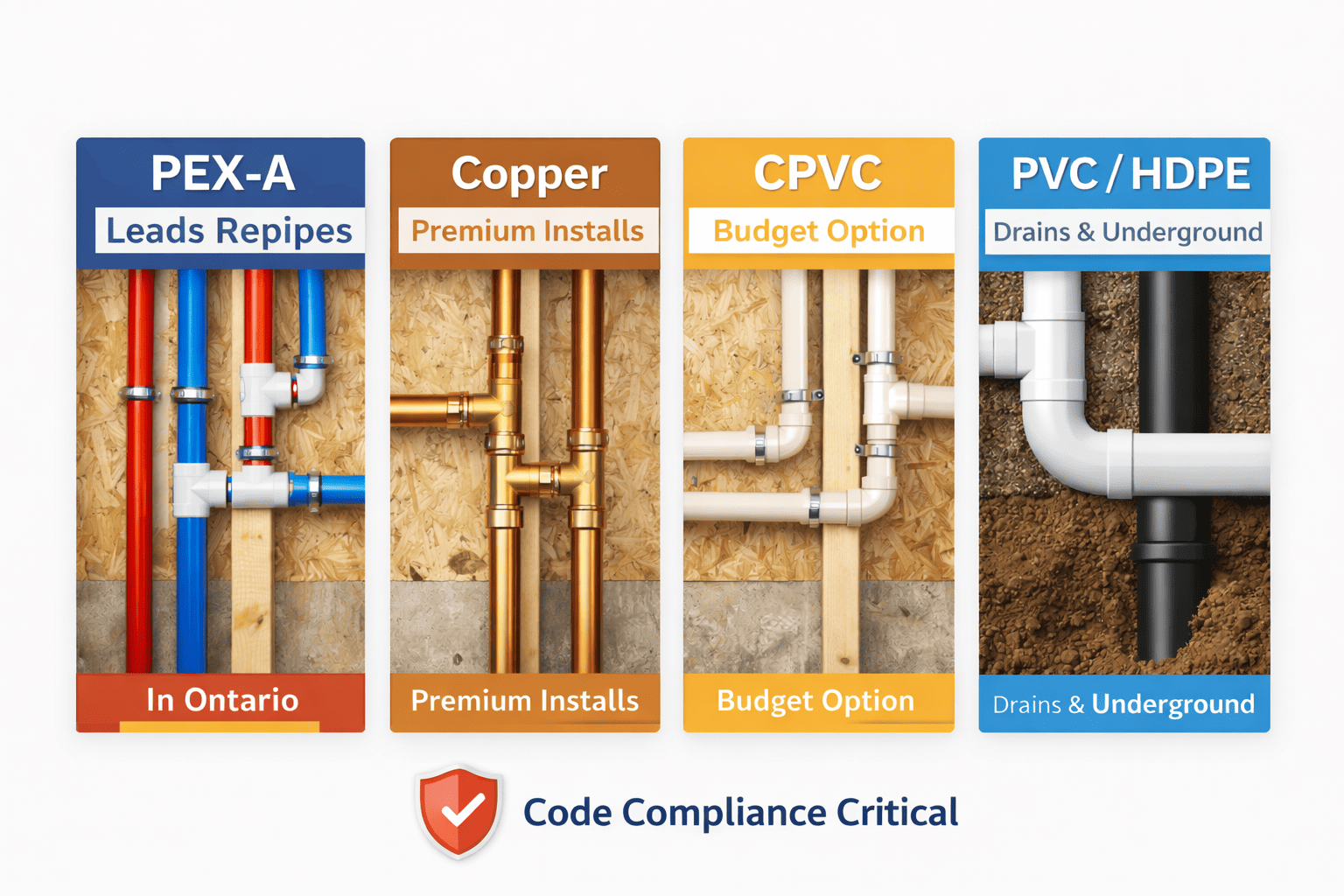
If you’re building, renovating, or planning a full repipe in Ontario, choosing the right plumbing material in 2026 isn’t just about cost. It’s about code compliance, long-term durability, insurance acceptance, and performance in cold climates.
Under the Ontario Building Code (OBC), Part 7 – Plumbing, potable water systems must use approved materials meeting CSA standards (such as CSA B137 series for plastic piping). That means your pipe choice must not only “work” – it must meet regulatory standards for pressure, temperature, and potable water safety.
Let’s break this down clearly, practically, and based on how homes actually perform in Ontario conditions.
PEX (Cross-linked Polyethylene) – Best Overall for Modern Homes
PEX has become the dominant material for new residential construction and repiping across Ontario in 2026.
Best for:
- Indoor hot and cold potable water
- Flexible routing around joists and corners
- Cold climate installations
- Full home repiping projects
Why It’s Winning
PEX (especially PEX-A) is highly flexible and can be installed with fewer fittings compared to rigid systems. Fewer joints = fewer potential leak points.
In Ontario winters, this matters. PEX can expand slightly if water freezes, reducing the likelihood of catastrophic bursting compared to rigid materials.
Under OBC requirements, PEX used for potable water must comply with CSA B137 standards, and fittings must also be approved.
Pros:
- Corrosion and scale resistant
- Faster installation = lower labor cost
- Flexible routing (ideal for finished basements)
- Freeze-resistant compared to rigid piping
- Compatible with manifold distribution systems
Cons:
- UV sensitive (cannot be used outdoors or left exposed to sunlight)
- Must be properly supported and protected from mechanical damage
Top Variant: PEX-A
PEX-A is the most flexible form and works with cold-expansion fittings, creating strong, full-bore connections. For repipes in Ontario homes, most licensed plumbers now recommend PEX-A for durability and installation efficiency.
Verdict for 2026:
Best overall choice for modern residential potable water systems.
Copper – Best for Durability and Long-Term Value
Copper has been used in Ontario homes for decades and remains a trusted material.
Best for:
- Visible piping
- Water heater connections
- High-temperature applications
- High-pressure systems
Copper meets Ontario Building Code requirements and is widely accepted by inspectors and insurers.
Pros:
- 50+ year lifespan when installed correctly
- Naturally antimicrobial
- Handles high temperatures extremely well
- Recyclable and environmentally sustainable
- Premium aesthetic for exposed installations
Cons:
- Higher material cost
- Labor-intensive installation (cutting, cleaning, soldering)
- Vulnerable to pinhole leaks in aggressive water conditions
- Susceptible to freezing and bursting
In older Toronto homes, copper remains common. However, rising copper prices and labor costs have made it less common in new full-house installations.
Verdict for 2026:
Still the gold standard for durability — but at a premium price.
CPVC (Chlorinated Polyvinyl Chloride) – Best for Hot Water on a Budget
CPVC is a heat-resistant plastic approved for potable water systems under CSA standards when installed properly.
Best for:
- Hot and cold water distribution
- Budget-conscious renovations
- Situations where copper cost is prohibitive
Unlike standard PVC, CPVC can handle hot water temperatures.
Pros:
- Corrosion resistant
- No soldering required (uses solvent cement)
- Lower cost than copper
- Approved for potable water
Cons:
- More brittle than PEX
- Can crack in extreme cold
- Requires careful installation technique
- Less flexible routing options
In Ontario’s cold climate, brittleness in unheated areas can be a concern if not insulated properly.
Verdict for 2026:
A practical mid-range solution, but less forgiving than PEX.
PVC & HDPE – Best for Specific Uses
These materials are not interchangeable with potable interior supply piping.
PVC (Polyvinyl Chloride)
Under Ontario code, PVC is primarily used for:
- Drain, Waste & Vent (DWV) systems
- Sewer connections
- Non-pressurized applications
It is affordable, durable, and easy to install — but not rated for hot potable water distribution.
HDPE (High-Density Polyethylene)
HDPE is typically used for:
- Underground municipal water mains
- Service lines from the street to the house
Its flexibility and resistance to ground movement make it ideal for buried applications in Ontario’s freeze-thaw cycles.
Verdict:
PVC = Drainage standard
HDPE = Underground water supply line
Not substitutes for interior hot water systems.
Recommendations for Homes in Ontario for 2026
For New Construction or Full Repiping
Use PEX-A for the main potable water distribution. It balances durability, freeze resistance, cost efficiency, and code compliance.
For Cold Climates
PEX performs best in freeze scenarios due to flexibility and expansion capacity.
For High-End or Visible Installations
Copper remains the premium choice for aesthetics and long-term performance.
For Budget-Conscious Hot Water Systems
CPVC can be a cost-effective alternative, provided proper insulation and installation.
For Drainage
PVC remains the industry standard under Ontario code.
For Underground Service Lines
HDPE is preferred for durability and ground movement resistance.
Code Always Comes First
Always confirm compliance with local inspection authorities before selecting materials.
The “best pipe” isn’t just about what’s trending in 2026. It’s about:
- Climate suitability
- Code compliance
- Insurance acceptance
- Installation quality
- Long-term maintenance
Picking the right pipe is just step one – how it’s installed, whether it meets Ontario code, and how it performs years down the line is what truly protects your property. That’s why local experience matters. Homes across Toronto, York, Vaughan, Cambridge, and Hamilton all come with their own plumbing challenges – from winter freeze bursts and pressure fluctuations to aging supply lines that are past their prime. These aren’t theoretical problems; they’re real situations we handle daily. Whether it’s an urgent leak, a failing water line, or a complete system upgrade, every job is completed to current Ontario Building Code standards. And because plumbing issues don’t stick to business hours, our team is available 24/7 across Toronto, York, Vaughan, Cambridge, and Hamilton – ready to step in when you need reliable help fast.
Plumbing Problem? Call Us Today
Plumbing Problem? Call Us Today