

Backwater Valve Installation in Cambridge – Do You Need One and Is There a Rebate?
Why Cambridge Homeowners Are Asking About Backwater Valves Right Now
The GRCA’s spring flood risk warning has put basement flooding back at the top of the conversation for homeowners across Cambridge and particularly in Galt, where the combination of a documented flood history and proximity to the Grand River makes sewer backup a real, recurring risk rather than a hypothetical.
One of the most common questions we’re receiving this spring is about backwater valves: what they do, whether a particular home needs one, what installation involves, and whether there’s any financial support available.
What Is a Backwater Valve and What Does It Actually Do?
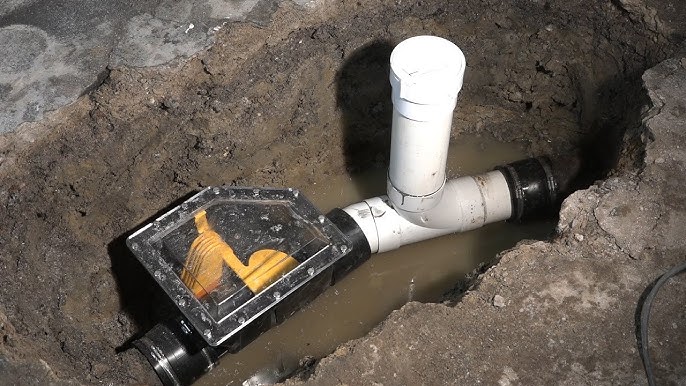
A backwater valve also called a backflow valve or sewer backup valve, is a one-way device installed on your home’s main sanitary sewer lateral. Under normal conditions, the valve’s internal flap stays open, allowing wastewater from your toilets, sinks, and floor drains to flow freely out of the house and into the city sewer system.
During a sewer surcharge event, when the city’s sewer system becomes overwhelmed by heavy rain or rapid snowmelt wastewater can reverse direction. Instead of flowing away from your home, it pushes back toward it through the same lateral. The backwater valve senses this reversal and its flap closes automatically, creating a physical barrier that prevents sewage from entering your basement.
It is important to note that while the valve is closed, you should not use any plumbing fixtures in the house toilets, sinks, washing machine, dishwasher. With the exit route blocked, any water used inside the home has nowhere to go. This is typically a short-duration event during peak storm conditions.
Who Needs a Backwater Valve in Cambridge?
Not every home in Cambridge has the same level of sewer backup risk, but there are clear indicators that make a backwater valve a strong investment:
- Your home is in Galt, particularly in low-lying areas near the Grand River or in neighbourhoods with a documented history of sewer backup during flood events
- Your basement contains plumbing fixtures – a bathroom, laundry hookup, utility sink, or floor drain, that sit below grade
- Your basement fixtures are lower than the top of the first upstream sewer manhole on your street (this is the technical building code threshold that determines mandatory installation in new builds in Ontario)
- You have experienced sewage odour in the basement after heavy rain events, slow-clearing floor drains during storms, or an actual sewer backup at any point
- Your home was built before backwater valves were standard or required – many Galt homes fall into this category
If you’re unsure whether your home meets the threshold, a licensed plumber can assess your basement fixture elevations relative to the street manhole and give you a direct answer.
How Backwater Valve Installation Works
Installation is a straightforward one-day job for a licensed plumber, though it does require opening a section of your basement floor to access the main sewer lateral. Here is what the process looks like:
- Building permit application. A permit is required under the Ontario Building Code for all backwater valve installations. We handle the application on your behalf.
- Locating the main sewer lateral. The valve is installed on the main sanitary lateral, typically close to where the pipe exits through the foundation wall toward the street.
- Concrete saw-cutting and excavation. A section of the basement floor, typically 60 to 90 cm is carefully opened to expose the pipe.
- Valve installation. The Mainline Fullport Backwater Valve is the only model approved under the Ontario Building Code for installation on the main sanitary lateral. The valve housing is fitted into the pipe with access provided through a cleanout cap at floor level.
- Concrete restoration. The floor is patched and restored.
- Municipal inspection. A building inspector must inspect and approve the installation before the permit is closed. This inspection is also required if you intend to apply for any available rebate programs.
Total job time is typically 4 to 6 hours. Disruption to the basement is limited to the area directly above the lateral.
Is There a Rebate for Backwater Valve Installation in Cambridge or Ontario?
This is the most frequently asked question, and it deserves a careful answer.
Across Ontario, many municipalities have established residential flood protection subsidy programs that cover part of the cost of backwater valve installation, sump pump installation, and weeping tile work. The City of Toronto’s program, for example, has historically covered up to 80% of installation costs up to a defined maximum per device. Ottawa, Peel Region, and others have similar programs.
For Cambridge specifically:
The City of Cambridge has referenced flood protection support for eligible homeowners in its sewer and infrastructure materials. However, these programs are funded on an annual basis and availability changes. We strongly recommend checking the current status directly through the City of Cambridge’s sewer and water page at cambridge.ca/sewer.
Book a Backwater Valve Assessment in Cambridge
A backwater valve assessment takes less than an hour and gives you a clear answer on whether your home needs one, what the installation would involve, and what the current rebate situation looks like at time of booking.
We are licensed plumbers serving Cambridge, Galt, and the surrounding area. Call now to book before the spring melt peaks.
Plumbing Problem? Call Us Today
Plumbing Problem? Call Us Today