

Drain Clogs 101 – Common Questions About Snaking Your Own Pipes
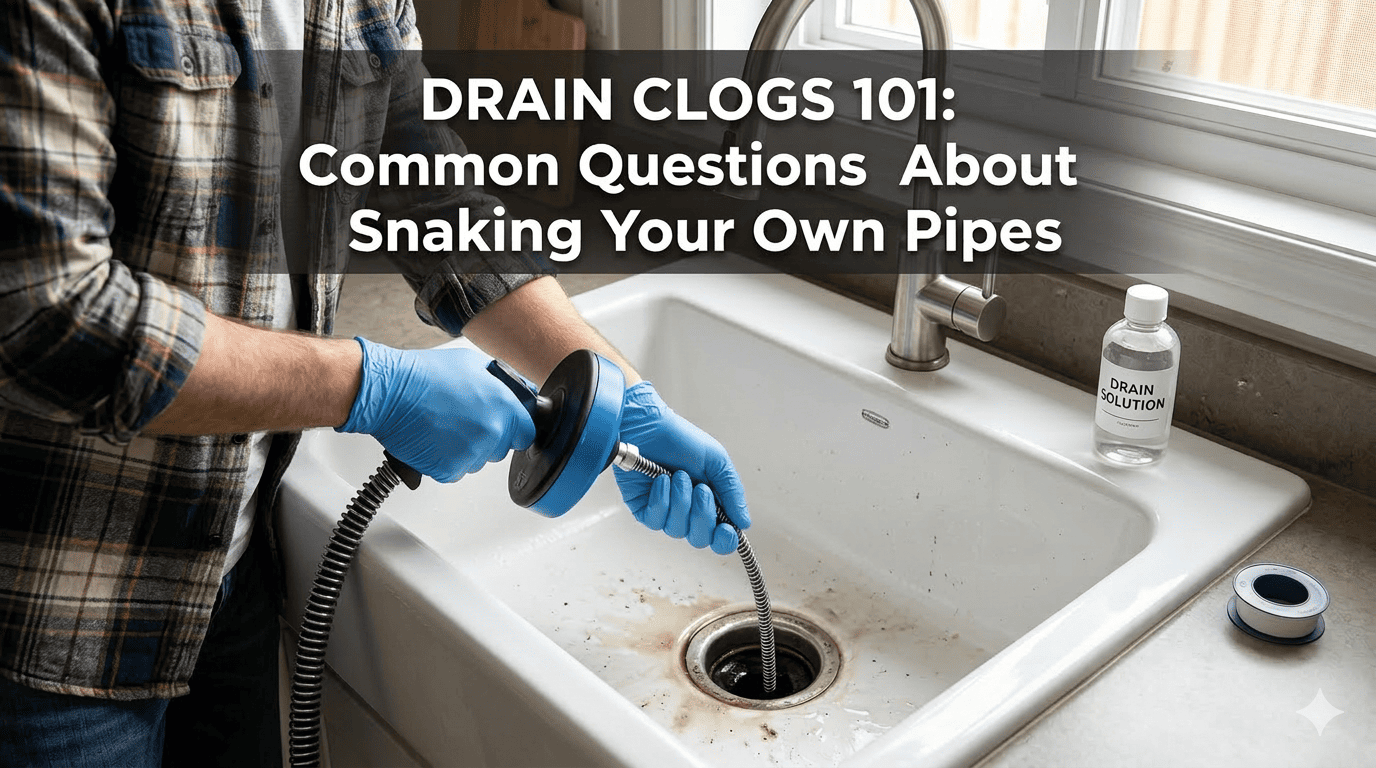
Is it ever safe to use a drain snake yourself?
For a minor clog in a single fixture – sink or tub – in a home with modern PVC plumbing, a manual hand snake used gently and without prior chemical treatments carries acceptable risk. The moment the problem involves multiple drains, older pipes, or recurrence, the risk profile shifts toward professional service.
How do I know if the snake damaged my pipe?
Damage from snaking typically shows up as a slow water stain, increased moisture under a cabinet or along a basement wall, or a localized mold smell appearing days to weeks after the attempt. A pressure test or camera inspection by a plumber can confirm pipe integrity if you have concerns.
What should I do if the snake gets stuck inside the pipe?
Do not force it. Continued rotation with a locked snake can coil the cable inside the pipe, score the pipe wall further, or break the cable. Turn off the drum and call a plumber. Retrieval of a lodged snake typically costs $150-$500 depending on depth and pipe access.
Are motorized (electric) drain snakes more dangerous than manual ones?
Yes, significantly. Electric drum augers generate substantially more torque than hand-crank models. Cable whip, kickback, and wrist/shoulder injury risk are all higher. Most plumbing trade organizations recommend electric augers only for trained professionals with proper guiding equipment.
Do drain snakes work on tree roots?
A snake with a root-cutting head can sever small, early-stage root intrusions temporarily, but cannot seal the pipe joint that allowed entry. Without sealing or pipe replacement, roots regrow – often within 3-6 months. Root intrusion requires professional hydro-jetting followed by pipe lining or replacement.
Plumbing Problem? Call Us Today
Plumbing Problem? Call Us Today